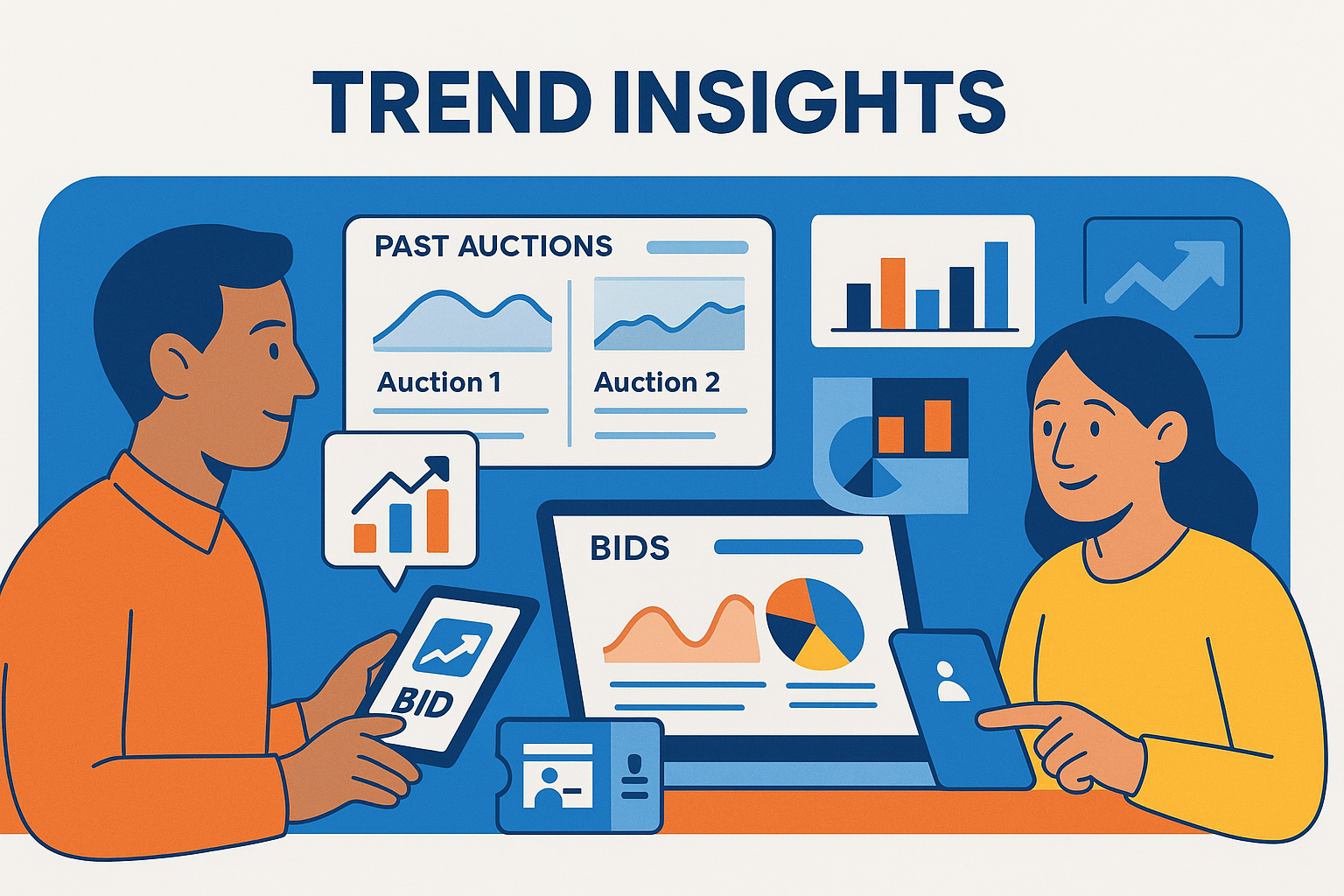
Nonprofits that run multiple fundraising auctions each year—or year after year—accumulate a valuable source of insight: bidding data. When analyzed properly, this data reveals trends in donor behavior, item preferences, bidding volume, category performance, and timing. These insights help organizations improve future auction planning, forecast revenue, and understand how their fundraising efforts evolve over time.
Modern auction platforms increasingly include multi-event analytics, allowing teams to compare performance across past auctions with ease. This article explains the key tools and capabilities nonprofits should use to analyze bidding trends effectively.
For a broader look at auction analytics, see the main pillar:
Auction Reporting and Analytics Tools
Understand Your Trends
CharityAuctions provides cross-event analytics, bidding trends, and donor insights that help you raise more with every new auction you run.
Visit CharityAuctions1. Why Multi-Auction Analytics Matter
A single auction provides useful data—but patterns only emerge when you compare multiple events. Multi-auction analysis helps nonprofits:
- See long-term donor engagement trends
- Identify which item categories consistently perform well
- Track returning vs. new bidder behavior
- Understand seasonal or annual revenue cycles
- Benchmark performance against previous events
To learn which metrics matter most, see:
How to track auction metrics
2. Tools That Track Bidding Behavior Across Auctions
2.1 Bid History and Activity Tracking
Platforms with detailed bid history across events allow nonprofits to analyze:
- Frequent bidders
- High-value bidders
- Bid abandonment patterns
- Bidders who return year after year
This helps support donor segmentation and stewardship.
See more donor-focused analytics in:
Donor analytics in auction platforms
2.2 Item Category Performance Tools
Category-level reporting shows which types of items consistently attract:
- The most bids
- The highest sale prices
- Strong repeat interest
This helps teams source better items for future events.
2.3 Trend Charts and Time-Series Tools
Time-based reports help identify patterns such as:
- When bidding spikes
- Whether pre-bidding is increasing year over year
- If bid volume is shifting toward online or hybrid formats
These insights guide event scheduling and promotion strategy.
3. Cross-Event Revenue Analysis Tools
Revenue reporting tools can show:
- Total raised per event
- Multi-year revenue growth
- Average revenue per bidder
- Paddle raise or fund-a-need trends
- Sponsor revenue across multiple years
Revenue comparisons help leadership understand the ROI of auctions as part of the broader fundraising mix.
For more comprehensive reporting options, see:
Charity event reporting tools
4. Donor Behavior Tools Across Multiple Events
Understanding donor patterns across years helps nonprofits:
- Identify loyal supporters
- Spot disengaged donors early
- Build donor retention strategies
- Personalize stewardship and outreach
- Create targeted communications for bidding groups
Multi-auction donor analysis becomes especially valuable when combined with training for staff.
See:
Resources to train staff on auction platforms
5. Tools That Compare Engagement Across Formats
Some auction analytics suites provide tools that compare:
- In-person vs. hybrid vs. fully online performance
- Bid volume based on event type
- Donor participation across formats
This helps organizations decide which event types drive the strongest engagement and financial results.
For how software supports scalable growth across formats, see:
How auction software scales fundraising
6. Export and Visualization Tools
Modern auction reporting platforms often include:
- Chart builders
- Heatmaps
- Custom dashboards
- Excel/CSV export features
- Data connectors for CRMs
Visualization tools make it easier for leadership and boards to understand trends without digging into raw data.
7. Machine Learning and Predictive Analytics (Emerging Tools)
More platforms are beginning to incorporate predictive capabilities, such as:
- Forecasting final bid values
- Predicting which items will outperform
- Identifying donors likely to bid aggressively
- Suggesting ideal opening bids and increments
These tools help nonprofits build more efficient and data-driven events over time.
How Multi-Auction Analytics Strengthen Future Events
Analyzing trends across multiple auctions helps nonprofits:
- Improve item sourcing
- Personalize donor engagement
- Choose the best event format
- Optimize marketing timing
- Increase long-term fundraising revenue
With each event, the organization gets smarter and more efficient—and donors receive a more engaging experience.
Frequently Asked Questions
What does “analyzing bidding trends across multiple auctions” actually mean?
You compare results from several events to find patterns in participation, item performance, pricing, timing, and revenue so you can predict outcomes and plan smarter future auctions.
Which KPIs should we trend across events for the best insights?
Bidders per item, items with ≥3 bidders, average bid, final price vs. FMV, watch rate, outbid alert response, conversion to payment, and net proceeds after fees and costs.
How do we make fair comparisons when auction sizes and audiences differ?
Normalize metrics per item, per bidder, or per 1,000 sessions. Segment by category and price band, and compare median values to reduce outlier bias.
How can we see which item categories and price bands are trending up or down?
Create a matrix of category × FMV band and plot median final price/FMV and bidders per item over time. Flag categories with consistent growth or decline across auctions.
Can we measure how closing rules (staggered, extended bidding) affect results over time?
Yes—track revenue and bids added in the last 10 minutes, extension frequency, and win-rate lift for lots that extended vs. those that didn’t across multiple events.
How do we detect seasonality and the best days/times to close auctions?
Bucket closes by weekday and hour, then compare bidders-per-item and last-hour revenue. Overlay monthly trends to identify seasonal peaks for your audience.
How can we track bidder retention and behavior across multiple auctions?
Create cohorts by first-auction date and chart return rates, bids per bidder, and revenue per returning bidder. Identify what brought cohorts back (channels, categories).
Can we estimate price sensitivity and optimal bid increments from past auctions?
Yes—compare bid step sizes vs. bid rate per view at similar price levels across auctions. Smaller steps often increase participation; test tiers and measure lift.
How do we see which channels repeatedly drive registrations and revenue over time?
Use UTMs consistently. Trend sessions → registrations → bidders → revenue by channel across events, and compute revenue per session for budget allocation.
What’s the best way to run A/B tests and confirm results across multiple auctions?
Test one variable at a time (e.g., increments, close cadence), collect results for several auctions, and use pooled analysis to check confidence before adopting globally.
How do we handle outliers like one-off celebrity items that skew our averages?
Analyze medians and trimmed means, and tag “special exposure” lots. Exclude or separately report them so trendlines reflect typical performance.
Can we track how the same item or package concept performs across multiple auctions?
Yes—assign item templates or tags and trend final price/FMV, bidders per item, and watch rate for each concept to see which ideas stay strong or fade.
What tools help us build cross-event dashboards and deeper analysis models?
Use platform exports or APIs to feed a BI tool (e.g., Looker Studio, Power BI). Create reusable views for YOY comparison, cohort retention, and category trends.
What data-cleaning steps improve accuracy when comparing multiple auctions?
Dedupe contacts by email/phone, standardize categories and FMV bands, ensure consistent UTM naming, and reconcile unpaid or voided invoices before trending.
How do we protect donor privacy while analyzing multi-auction behavior?
Use role-based access, minimize PII in exports, and aggregate at cohort/category levels when sharing broadly. Honor unsubscribe and consent preferences in every system.
How do we convert multi-auction insights into concrete improvements next time?
Create a “next-event plan” with 3–5 changes: promote top categories, adjust increments at key price bands, set close windows on high-performing days, and re-target returning bidder cohorts.
💡 Try this in ChatGPT
- Summarize the article "Tools to Analyze Bidding Trends Over Multiple Auctions" from https://blog.charityauctions.com/tools-to-analyze-bidding-trends-over-multiple-auctions/ in 3 bullet points for a board update.
- Turn the article "Tools to Analyze Bidding Trends Over Multiple Auctions" (https://blog.charityauctions.com/tools-to-analyze-bidding-trends-over-multiple-auctions/) into a 60-second talking script with one example and one CTA.
- Extract 5 SEO keywords and 3 internal link ideas from "Tools to Analyze Bidding Trends Over Multiple Auctions": https://blog.charityauctions.com/tools-to-analyze-bidding-trends-over-multiple-auctions/.
- Create 3 tweet ideas and a LinkedIn post that expand on this help topic using the article at https://blog.charityauctions.com/tools-to-analyze-bidding-trends-over-multiple-auctions/.
Tip: Paste the whole prompt (with the URL) so the AI can fetch context.